By Mahmoud Muhammad, Editor with Radio Kano
The rapid growth of social-media content creation is changing the way political information is produced and consumed in Kano, Gombe, Sokoto, Kebbi and Zamfara, raising an important question about where the boundary between journalism, political communication and advocacy should lie.
In many communities, political stories that once passed through newsrooms are now being produced directly for Facebook, TikTok, YouTube, WhatsApp and other platforms. Some creators have built large audiences by presenting political events, speeches and government activities in ways designed to attract attention and satisfy particular audiences.
The development is not, by itself, evidence that content creators have “taken over” journalism. Content creation and journalism overlap in some areas, but journalism carries professional obligations such as accuracy, fairness, verification, editorial independence and accountability.
The Nigerian journalists’ code specifically addresses editorial independence, accuracy and fairness, while the NUJ constitution provides for ethics and disciplinary mechanisms.
The more difficult issue is whether some political communicators — whether professional journalists or independent content creators — are presenting government activities without adequately questioning public expenditure, policy decisions and allegations of wrongdoing.
That concern becomes particularly important when public funds are involved. Since the removal of the petrol subsidy in 2023, states and local governments have received substantially increased revenues. One recent analysis based on Federal Ministry of Finance figures estimated that ₦15.8 trillion in subsidy savings between June 2023 and December 2025 was distributed across the federation, with ₦6.52 trillion attributed to states and ₦3.88 trillion to local governments. �
Premium Times Nigeria
The figures have consequently created a legitimate public-interest question: how have the additional resources been spent, and what measurable benefits have citizens received? Asking that question does not mean accusing every governor of corruption.
Any allegation of diversion or money laundering requires documentary evidence and investigation by the appropriate authorities.
The media has an important role in asking such questions. The Attorney-General of the Federation, Lateef Fagbemi, has also publicly acknowledged that press reporting can help prevent issues from being “swept under the carpet,” while warning journalists against sensationalism and unverified information. �
Premium Times Nigeria
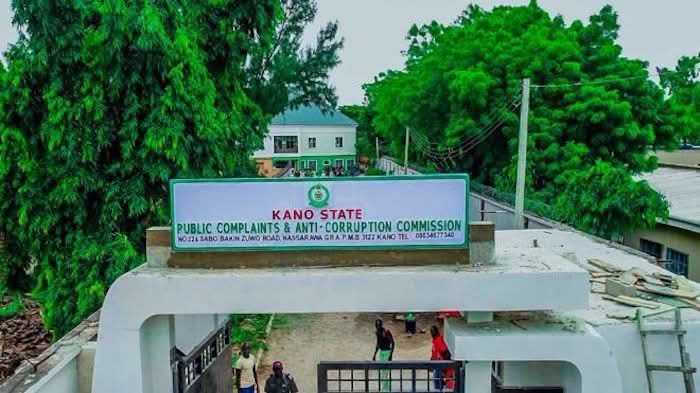
At the same time, responsibility cannot be placed entirely on the Nigeria Union of Journalists. The NUJ is a professional union, while individual journalists, editors and media organisations make editorial decisions. Where there are credible allegations of financial misconduct, journalists can investigate and report the evidence, while agencies such as the EFCC and ICPC have the statutory responsibility to investigate suspected financial and corruption offences.
Indeed, the EFCC states that the President, governors and their deputies are covered by constitutional immunity from prosecution while in office, but that immunity does not prevent investigation. The commission also provides channels through which allegations can be formally reported. �
Economic and Financial Crime Commission +1
There have already been examples showing why independent scrutiny matters. In Kano, for instance, reports in 2025 said the EFCC and ICPC were investigating a controversy involving an alleged ₦6.5 billion diversion, while the Kano State Government denied the allegation and described the reports as politically motivated. Such cases demonstrate why journalists must report both the allegation and the response rather than presenting an unproven accusation as established fact. �
Premium Times Nigeria
The debate therefore should not simply be framed as “content creators versus journalists.” The deeper question is who is providing citizens with independently verified information about government decisions, public spending and political claims. A content creator who investigates documents and presents evidence can contribute meaningfully to public accountability, while a formally trained journalist can equally fail professionally if he or she abandons verification and independence.
There is also a responsibility on politicians and governments. Public officials should make budgets, contracts, expenditure records, project locations and implementation reports accessible enough for journalists and citizens to examine. When governments provide evidence and answer difficult questions, public debate becomes less dependent on rumours, partisan narratives and social-media personalities.
As for the claim that better use of subsidy-removal-related funds would have prevented the present political tensions between President Bola Tinubu and former Vice-President Atiku Abubakar, that is a political interpretation rather than an established fact. The two issues should be separated: the management of public resources can be investigated on its own evidence, while disagreements between political actors should be analysed through their documented statements, policies and political actions.
Ultimately, responsibility for the quality of public information is shared. Journalists must protect professional standards; editors must defend editorial independence; content creators must distinguish commentary from verified reporting; politicians must provide accurate information about public expenditure; and anti-corruption agencies must investigate credible allegations without political discrimination. The public, meanwhile, deserves evidence-based reporting rather than stories written simply to please either government or opposition politicians.
Mahmoud Muhammad is a Kano base political analyst and also Editor with Kano Radio indagi3792@gmail.com 07060766191
About The Author