By: Editor Mahmoud Muhammad
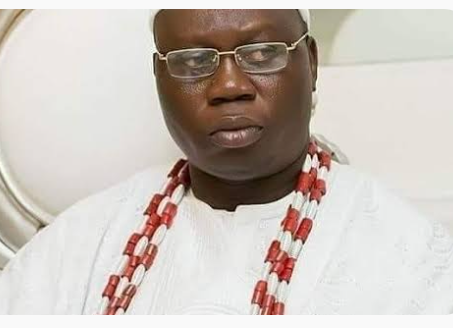
Gani Adams, the Aare Ona Kakanfo of Yorubaland, has called for a return to true federalism in Nigeria, describing the current system of governance as a distorted and overly centralised structure responsible for insecurity and underdevelopment.
Adams made the call on Wednesday during an interview on Frontline, a current affairs programme on Eagle 102.5 FM, Ilese-Ijebu, Ogun State, where he argued that Nigeria is no longer operating a genuine federal system but a unitary arrangement in disguise.
Tracing the roots of the problem, he said the country’s original federal structure at independence in 1960, which allowed regions to develop at their own pace, was disrupted following the 1966 Nigerian coup d’état.
According to him, the military intervention introduced a centralised system that concentrated power at the federal level, weakening states and limiting their capacity to address local challenges.
“I subscribed to true federalism. What we are running now is not federalism; it is statism. The system has been turned into a unitary structure,” he said.
Adams further noted that the expansion of items on the exclusive legislative list from 45 to 68 has stripped states and local governments of critical powers, making effective governance difficult.
He argued that this imbalance has rendered governors ineffective as chief security officers, as they lack control over security agencies.
“When a governor gives an order, the Inspector-General of Police can counter it based on directives from the presidency. That shows we are not practising federalism,” he said.
The Yoruba leader stressed that decentralised policing, including state and community policing, is essential to addressing Nigeria’s security challenges.
Drawing comparisons with the United States, Adams said multiple layers of policing—federal, state and local—enable effective management of security in a large and diverse population.
He maintained that fears of abuse of state police by governors are misplaced, noting that even the current centralised system has been used for political purposes.
Beyond security, Adams linked the absence of true federalism to economic stagnation, arguing that overdependence on federal allocations has discouraged innovation and productivity at the state level.
He cited the achievements of past regional leaders such as Obafemi Awolowo and Samuel Ladoke Akintola, noting that their successes were made possible by the autonomy enjoyed under the regional system.
According to him, the Western Region witnessed significant development during that era, including free education, industrial investments and landmark projects like the Cocoa House in Ibadan.
He lamented that such achievements have not been replicated under the current structure, accusing modern leaders of relying heavily on federal resources rather than driving internal development.
Adams also warned that failure to restructure Nigeria could fuel agitation for secession, citing global examples where unresolved political and structural issues led to the breakup of countries.
“The only way forward is true federalism. If we fail to act now, frustrations may push parts of the country towards separation,” he said.
He concluded that restructuring Nigeria is no longer optional but necessary for national unity, effective governance and sustainable development.
About The Author