By Editor-in-Chief Mahmoud Muhammad & Editor at large
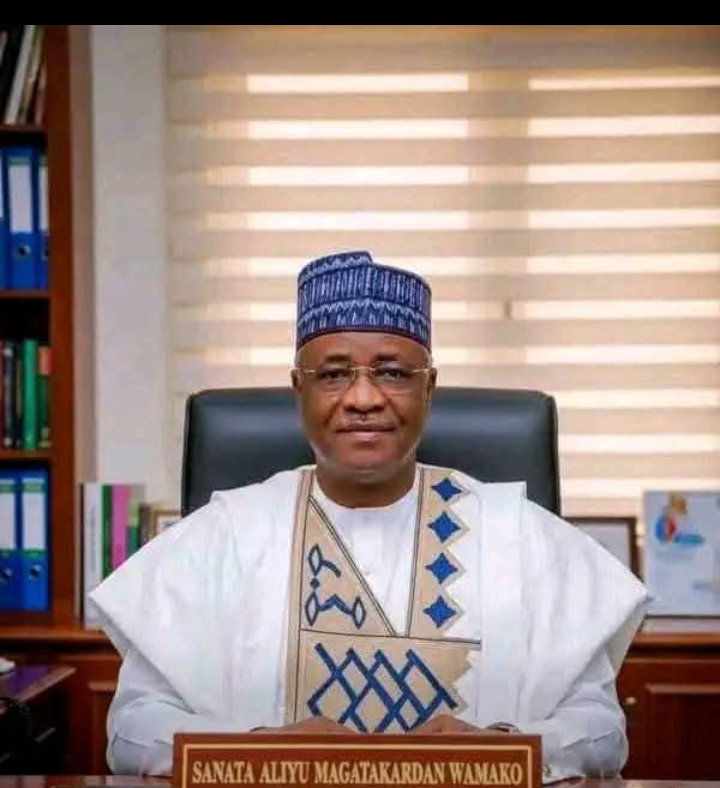
The rooster that God has destined to crow will crow, even if you muzzle it. That Hausa proverb, “Zakaran da Allah ya nufa da tsira ko ana muzuru ana shaho sai ya yi,” captures the political moment for Senator Aliyu Magatakarda Wamakko, APC leader in the North-West, as he moves to consolidate party support while critics question his record against insecurity and hardship.
Wamakko, former governor of Sokoto State and a ranking senator, remains one of the most influential APC figures in the zone. Since 2023, he has chaired key reconciliation drives to calm post-election disputes among APC chapters in Sokoto, Zamfara, Kebbi, Katsina, Kaduna, Kano and Jigawa.
His political shape lately has been to “accord more support” to the Tinubu administration’s policies at the centre, while tightening his grip on North-West APC structures. He has hosted strategy meetings with governors, lawmakers, and grassroots leaders, pushing a message of unity ahead of 2027.
That effort produced visible results: defection of opposition figures in Sokoto and Kebbi to APC, and smoother nomination processes for federal boards. Wamakko frames it as stability. Opponents call it consolidation without reform.
Yet the same region he leads politically is bleeding. Banditry, mass kidnappings, and rural displacement have emptied villages in Zamfara, Katsina, Sokoto, and parts of Kaduna. Farming, the North-West’s economic backbone, is collapsing under levies and attacks.
Poverty data remains grim. NBS figures consistently place North-West states among those with the highest multidimensional poverty rates. Poor standards of living, from access to health to school enrollment, track closely with insecurity.
Critics argue Wamakko’s weakness lies in fighting opponents within APC more than fighting the crisis outside it. Party discipline has taken priority over public pressure for a coordinated regional security plan. His defenders say security is primarily a federal executive matter, not a party leader’s.
Still, as de facto APC North-West leader, expectations rest on him to broker more than politics. Traditional rulers and civil society groups have urged him to convene a North-West Security and Livelihood Summit that cuts across party lines.
So far, Wamakko’s public interventions include visits to IDP camps in Sokoto, distribution of grains, and motions on the Senate floor demanding more military deployment. He has backed bills to establish a North-West Development Commission, modelled on the NDDC.
He has also lobbied the Presidency for special agro-ranger squads and faster release of funds to states under the National Safe Schools Initiative. But implementation lags, and attacks persist.
On kidnapping, Wamakko has condemned ransom payments and called for digital tracking of forests. He supported the 2022 law criminalizing ransom, though enforcement remains weak. Community leaders say they need his weight behind state police and local intelligence funding.
Economically, his camp points to constituency projects: boreholes, classrooms, and fertilizer distribution. Critics counter that palliatives cannot replace a regional economic blueprint for irrigation, livestock corridors, and youth jobs.
The proverb returns here: if Wamakko is destined to lead the North-West out of crisis, muzzling by political enemies or bureaucracy should not stop him. The test is whether he will crow loud enough on security, not just party loyalty.
A holistic approach must start with security architecture. That means joint North-West operations, shared intelligence cells, and state-community policing with clear command. Wamakko could use his access to the President and service chiefs to push this.
Second is justice and dialogue. Banditry has criminal and economic roots. Amnesty for repentant fighters must pair with disarmament and swift trials for atrocities. Traditional institutions, which Wamakko knows well, are critical mediators.
Third is livelihood revival. Secure farming corridors, subsidized inputs, and insurance for farmers would bring people back to land. The North-West Development Commission, if passed, could fund dams, roads, and markets.
Fourth is education reform. Out-of-school children feed recruitment pipelines for gangs. Wamakko’s network could drive a North-West school enrolment pact with governors, tied to federal incentives.
Fifth is youth enterprise. Banditry thrives where jobs don’t. A regional MSME fund, backed by APC states and private sector, would target skills in solar, logistics, and agro-processing.
Sixth is accountability. Funds for security votes, palliatives, and projects need public dashboards. As party leader, Wamakko can enforce transparency standards among APC governors to rebuild trust.
Seventh is cross-border control. Arms flow through Niger and Benin borders. A North-West border task force, combining customs, immigration, and vigilantes, needs political backing from the zone’s top APC voice.
Eighth is humanitarian coordination. IDPs need more than food. Health, trauma care, and resettlement require state-federal synergy that a zonal leader can unlock.
Ninth is political tolerance. Fighting opponents within APC drains energy from fighting bandits. Reconciliation must extend to critics, so the zone speaks with one voice on security.
Tenth is metrics. The public wants to know: how many villages reopened, how many schools restarted, how many kidnappers prosecuted. Wamakko’s team could publish quarterly North-West recovery reports.
None of this is new. What’s missing is sustained political will at zonal level. Wamakko has the network, history, and access. Whether he deploys it beyond party battles will define his legacy.
For now, he accords support to Abuja and keeps APC’s North-West house in order. But the rooster destined to crow must crow for the people too, not just the party. Until banditry eases and markets reopen, the proverb remains a challenge, not a compliment.
MAHMOUD wrote this peace, presently FORMER LEADERSHIP REGIONAL EDITOR now Publisher The Northern Star.
About The Author