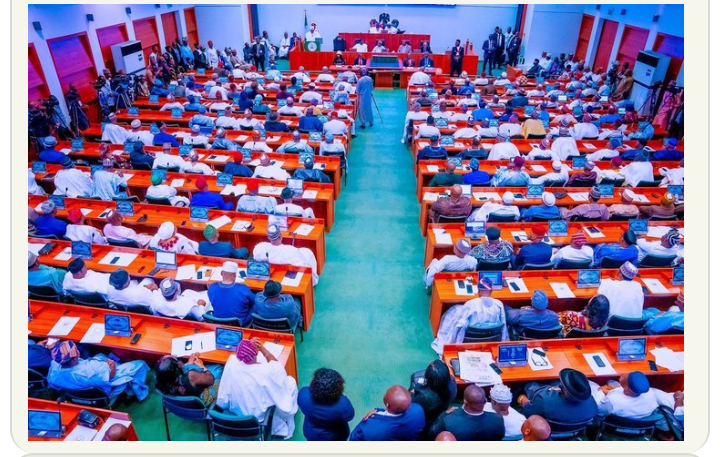
On Wednesday, February 4, 2026, our distinguished senators passed the Electoral Act, 2022 (Repeal & Enactment) Bill, 2026. Sounds like progress, right? Wrong. Hidden in those 155 clauses is a decision that should make every Nigerian who believes in free and fair elections deeply uncomfortable.
They rejected mandatory electronic transmission of election results.
Let that sink in for a moment. In 2026, when a teenager in Lagos can transfer money to someone in Kano within seconds using their phone, when farmers in remote villages use mobile apps to check market prices, when even your grandmother probably uses WhatsApp to share family gossip, our Senate has decided that trusting technology to transmit election results is too much of a risk.
The question we should all be asking is: too much of a risk for whom?
The Heart of the Matter
Here’s what happened. A proposed clause, known as new Clause 60(5), would have required presiding officers to electronically transmit polling unit results in real time to INEC’s IReV portal immediately after completing Form EC8A. This means that the moment results are announced at your polling unit, they would be uploaded to a central system that everyone can see. Transparency. Accountability. The things democracy is supposed to be built on.
The Senate said no.
Instead, they chose to stick with the 2022 framework. Under this system, results are manually completed, signed, stamped, and handed out to party agents and security personnel. Results are announced at polling units and then transferred “in a manner as prescribed by INEC.” Notice that phrase. It’s deliberately vague. It gives room for anything to happen between when results leave the polling unit and when they arrive at the collation center.
And we all know what can happen in that space. We’ve seen it before.
Why Does This Matter So Much?
If you’re wondering why Nigerians are so passionate about electronic transmission of results, you haven’t been paying attention to our electoral history.
Think back to the 2023 general elections. Remember the chaos? Remember how INEC promised that results would be uploaded to the IReV portal in real time, only for the system to mysteriously fail at the most crucial moments? Remember how results that Nigerians watched being announced at their polling units somehow looked different by the time they reached the collation centers?
The 2023 election is still a wound that hasn’t healed. President Tinubu continues to face legitimacy questions not because people dislike him personally, but because millions of Nigerians don’t believe the numbers that put him in office reflect the actual votes cast. The IReV system that was supposed to bring transparency became a symbol of everything that went wrong. Results that should have been uploaded weren’t. Results that were uploaded didn’t match what was announced. The whole thing was a mess.
And now, instead of fixing the problem by making electronic transmission mandatory and foolproof, the Senate has decided to make it optional. They’ve essentially given INEC the freedom to decide whether or not to use technology, and history has shown us what happens when you leave such decisions to discretion.
About The Author