By Mahmoud Muhammad Abuja
A United Kingdom-led coalition of about 40 countries is moving to address the growing crisis in the Strait of Hormuz, as global energy supplies face severe disruption amid the ongoing conflict involving the United States, Israel, and Iran.
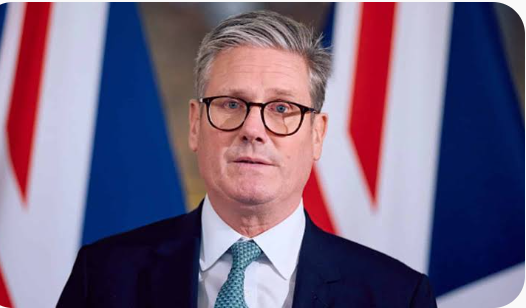
British Prime Minister Keir Starmer announced that foreign ministers from participating nations will convene virtually to explore diplomatic and political solutions to restore safe passage through the vital shipping route.
The meeting, chaired by UK Foreign Secretary Yvette Cooper, is expected to outline coordinated international efforts to ease the gridlock.
The Strait of Hormuz, a critical artery for global oil transport, has seen traffic nearly grind to a halt following Iran’s retaliatory actions against commercial vessels.
The disruption comes in response to the escalating war triggered by joint US-Israeli strikes on Iran, leading to a sharp rise in global oil prices and heightened fears over energy security.
Notably absent from the summit is the United States, after President Donald Trump signalled that securing the waterway is not Washington’s responsibility.
Trump has also renewed criticism of European allies and threatened to reconsider US participation in the North Atlantic Treaty Organization.
Countries participating in the coalition including France, Germany, Italy, Canada, Japan, the United Arab Emirates, and Nigeria have jointly called on Iran to cease actions blocking the strait.
They also pledged to support efforts aimed at ensuring safe maritime navigation.
Despite the urgency, coalition leaders have emphasized that military intervention is not currently under consideration. Starmer reiterated that most countries involved have no interest in entering the conflict, stressing instead the importance of diplomacy.
French President Emmanuel Macron echoed this position, warning that any attempt to forcibly reopen the strait would be impractical and dangerous.
He noted that such an operation would expose vessels to significant threats, particularly from Iran’s Islamic Revolutionary Guard Corps, which possesses advanced missile and naval capabilities.
Macron advocated direct engagement with Tehran as the most viable path to de-escalation and reopening the waterway.
Reports indicate that since the conflict escalated in late February, at least 23 commercial vessels have been attacked in the Gulf region, resulting in multiple casualties and further destabilizing maritime trade.
While Iran has stated that non-hostile vessels may still pass through the strait, uncertainty and security risks have discouraged most shipping operations.
The current diplomatic push is seen as an initial step, with further technical and military-level discussions expected to follow particularly on how to secure maritime routes once hostilities subside.
Analysts say the outcome of the coalition’s efforts could have far-reaching implications for global trade, energy markets, and the balance of international security responsibilities in an increasingly volatile region.
About The Author