By Editor Mahmoud Muhammad
Former Kano State Governor and ex-presidential candidate Rabiu Musa Kwankwaso has outlined the reasons behind his decision to join the emerging Nigeria Democratic Congress (NDC), citing ideological alignment, internal party instability, and the need for a stronger national platform ahead of the 2027 general elections.
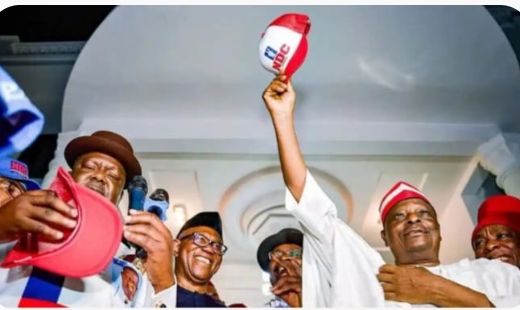
Kwankwaso’s defection was announced alongside former Anambra State Governor Peter Obi, following a high-level meeting with NDC leadership in Abuja.
The duo were formally received by party officials led by former Bayelsa State Governor Seriake Dickson, marking a major shift in Nigeria’s opposition structure.
Kwankwaso explained that the decision followed extensive consultations on national issues, particularly education reform, youth empowerment, security, and national unity.
He stated that the NDC provides a more coherent ideological platform compared to previous political arrangements affected by internal disputes and leadership crises.
According to reports, both politicians had recently exited the African Democratic Congress (ADC) after prolonged internal tensions and litigation challenges weakened the coalition’s stability.
Political observers say the move significantly reshapes Nigeria’s opposition landscape, potentially consolidating two of the country’s most influential political figures under a single emerging platform.
However, analysts caution that the durability of the alliance will depend on internal cohesion and the ability to manage competing ambitions ahead of 2027.
Ultimately, Kwankwaso’s explanation reflects a broader political recalibration in Nigeria—where shifting alliances continue to redefine the balance of power as the next general election approaches.
About The Author