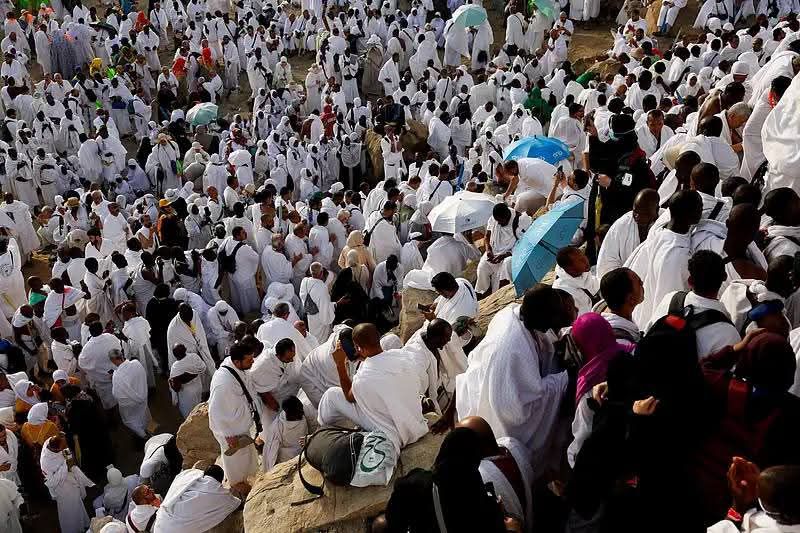
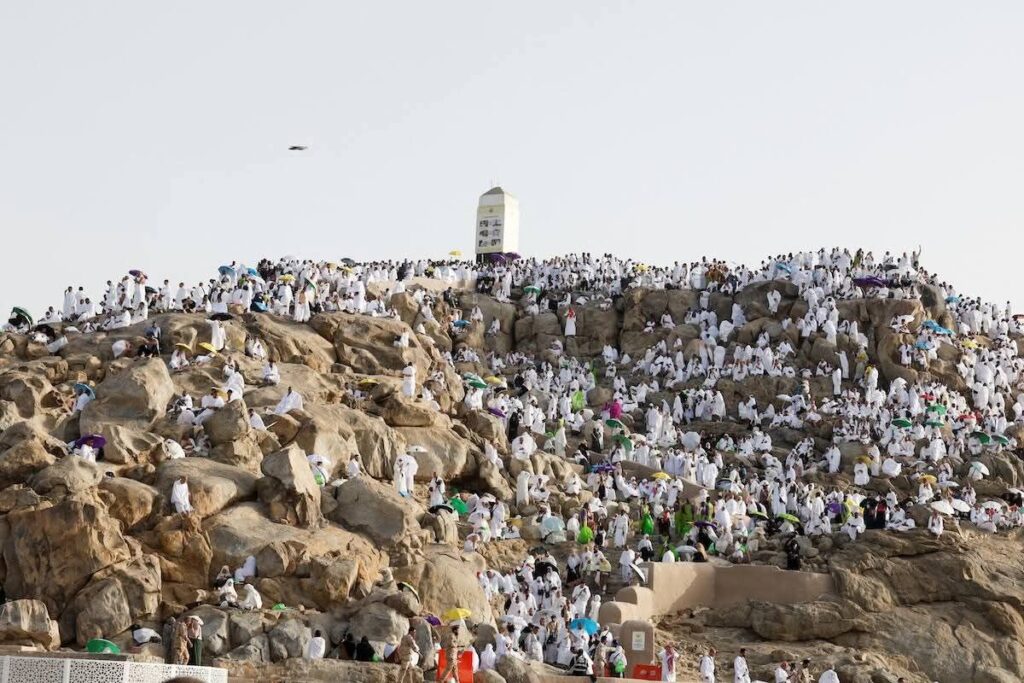
Millions of Muslim pilgrims gathered at Mount Arafat, a 70-metre rocky hill near Mecca, for the climax of the annual hajj pilgrimage, as temperatures soared close to 40°C. The pilgrims, dressed in white robes, climbed the hill from dawn, seeking spiritual solace and forgiveness.
The hajj pilgrimage is one of the five pillars of Islam, and it’s mandatory for Muslims who can afford it and are physically able to make it. This year’s pilgrimage has been marked by extreme heat, with temperatures expected to reach 47°C in Makkah and 44°C in Madinah. ¹ ² ³
Saudi authorities have taken measures to mitigate the heat, including setting up shaded areas, distributing water and umbrellas, and deploying medical teams. The government has also urged pilgrims to stay hydrated, avoid peak heat hours, and seek medical attention if needed. ⁴ ⁵ ⁶
The pilgrims will spend the night in Muzdalifah, where they’ll collect pebbles for the symbolic “stoning of the devil” ritual in Mina. The hajj is a significant event for Muslims, and it’s expected to attract over 1.5 million pilgrims from around the world. ⁷
Despite the challenges posed by the heat, pilgrims remain determined to complete their spiritual journey. “I am in a state of blessing and happiness,” said Egyptian pilgrim Samya Abdul Moneim. “It’s an indescribable feeling, truly”.
The Saudi government has implemented various measures to ensure pilgrim safety, including AI-powered crowd management systems and real-time health monitoring. The government has also warned pilgrims to avoid climbing mountains or high places, as it can cause extreme physical exertion and increase the risk of heat exhaustion.
The hajj pilgrimage is a testament to the resilience and devotion of Muslims worldwide. As the pilgrims gather at Mount Arafat, they’re reminded of the importance of unity, compassion, and forgiveness.
Would you like to know more about the hajj pilgrimage or the measures being taken to ensure pilgrim safety?
About The Author