By Mahmoud Muhammad Kano
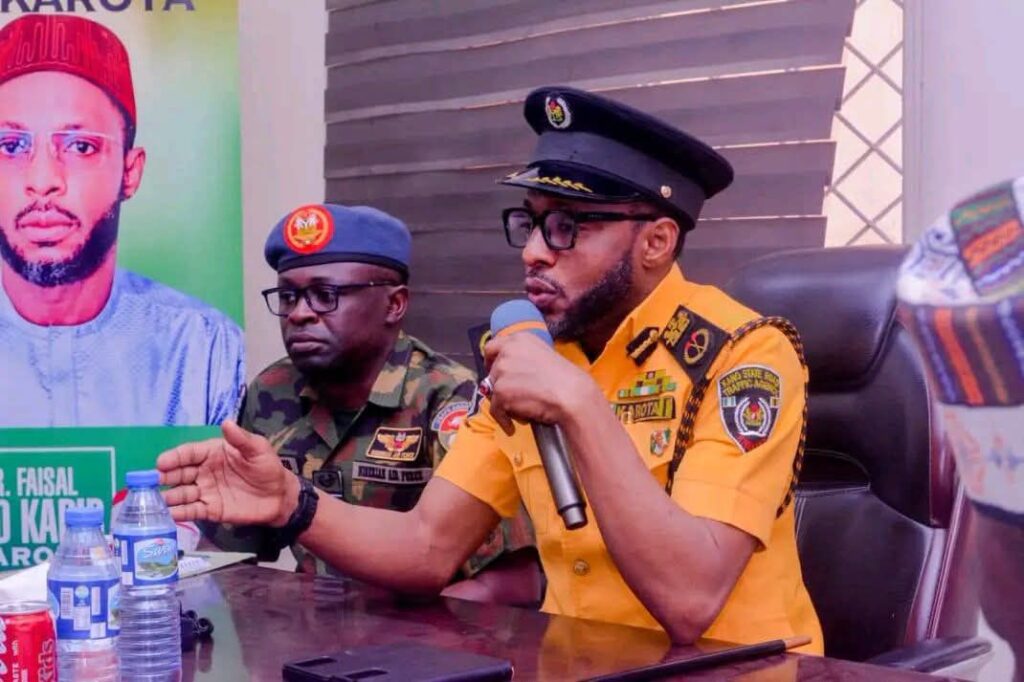
KANO, 16th June 2026 – The Kano State Road and Traffic Agency, KAROTA, is once again at the center of controversy after a series of tense arrests involving Army personnel. The incidents have reignited a long-standing dispute: must military officers obey civilian traffic laws, or does their uniform place them above road regulations?
Sources within KAROTA describe some of the worst scenes during recent enforcement operations. Officers say several Army personnel resisted arrest, refused to present vehicle documents, and drove against traffic with sirens blaring. KAROTA officials insist they were only enforcing the same rules applied to commercial drivers, tricycles, and private motorists.
The “brain” behind KAROTA’s firm stance, according to agency insiders, is a mandate to reduce road crashes and indiscipline on Kano roads. The agency argues that exemptions for uniformed personnel create a culture of impunity. When some drivers ignore traffic lights, one-way violations, and seatbelt laws, ordinary citizens follow suit, undermining public safety.
Army officers, on the other hand, cite operational urgency and security duties. They argue that delays at checkpoints or during traffic stops can compromise missions. Some also claim that military vehicles and personnel are sometimes exempt from certain civil regulations under federal directives. That interpretation clashes directly with KAROTA’s state-level enforcement powers.
Legal battles have since emerged. KAROTA has taken some cases to court, arguing that the 1999 Constitution and Kano State Road Traffic Law empower it to regulate all road users within the state, except diplomatic missions. The military’s position is that its personnel are subject to military law first, and civilian traffic rules only when not on official duty.
The worst situations occur during arrests. Eyewitnesses report shouting matches, attempts to seize KAROTA officers’ phones, and in some cases, military vehicles forcing their way through barricades. KAROTA says its officers are unarmed and rely on persuasion, while Army personnel feel the agency does not respect the chain of command.
Traffic experts say the root issue is poor coordination between state agencies and federal security forces. Without clear joint protocols, every stop becomes a test of authority rather than a safety check. Other states like Lagos and FCT have set up liaison units to handle military traffic violations discreetly, reducing public confrontation.
For Kano residents, the fallout is visible: gridlock, damaged vehicles, and fear of getting caught between uniformed men. Both sides agree on one thing — road discipline saves lives. The question now is whether KAROTA and the Nigerian Army can agree on a framework that protects both security operations and the rule of law. Until then, every siren on Kano roads risks becoming another flashpoint.
About The Author