By Mahmoud Muhammad Kano
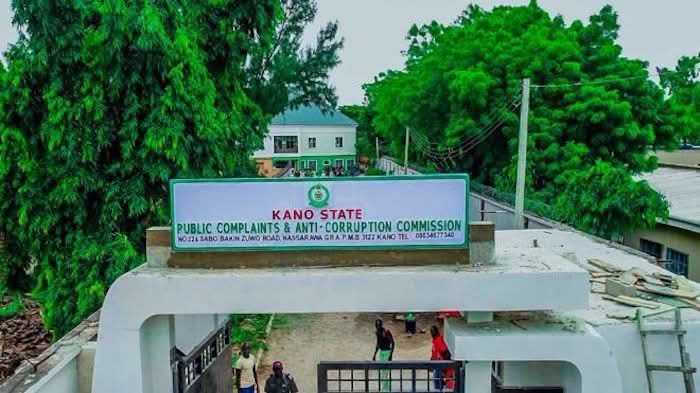
The audit report on Kano State’s 2024 accounts, published by SolaceBase, uncovered a pattern of financial irregularities across several ministries and the state‑owned Kano Agricultural Supply Company (KASCO). Key findings include:
– *Ministry of Transportation* – A payment of ₦81.35 million to a contractor was made without deducting the statutory 7.5 % VAT and 7.5 % withholding tax, totaling ₦12.20 million in uncollected taxes, a clear breach of the FIRS Act 2007. The ministry has not responded to the February 6, 2025 query.
– *Ministry of Higher Education* – ₦25.38 million was disbursed as educational assistance without beneficiary signatures, and ₦25.78 million of travel‑related expenditures (flights, hotels, allowances) were left unretired, violating financial‑control procedures. No clarification has been provided after the February 12, 2025 letter ¹ ².
– *Ministry for Religious Affairs* – ₦33.70 million was transferred directly into personal accounts with no retirement documentation, representing a serious breach of public‑finance rules ¹ ².
– *KASCO* – The company reported a turnover of ₦4.76 billion, but auditors established actual turnover at ₦5.31 billion, an under‑reporting of ₦1.23 billion. Additional discrepancies include:
– Blending fees recorded as ₦450.42 million versus actual ₦418.35 million (variance ₦32.07 million).
– Interest on bank deposits recorded as ₦109.14 million versus actual ₦103.95 million (variance ₦5.19 million).
– Cash‑book sales of ₦2.69 billion compared with bank inflows of ₦4.76 billion, a gap of ₦2.08 billion.
– Purchases of raw materials and finished goods reported as ₦2.93 billion, while auditors found ₦4.26 billion, a shortfall of ₦1.33 billion.
– Weak internal controls: missing production records, absent fixed‑asset and debtors registers, no monthly bank reconciliations, and numerous unjustified inter‑bank transfers ¹ ² ³.
When contacted, Kano State Commissioner for Information, Ibrahim Waiya, declined to comment on the findings ².
Would you like more details on the specific actions being taken by the Kano State government to address these issues, or a deeper dive into how internal‑control weaknesses are typically remedied in public sector audits?
About The Author