By Aisha Mahmoud
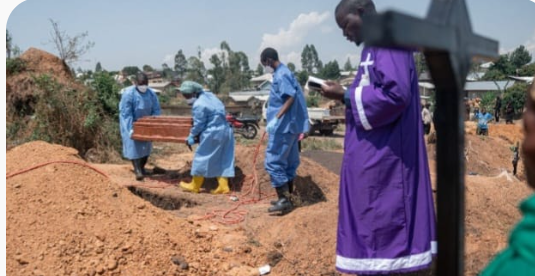
The death toll from the latest Ebola virus disease (EVD) outbreak in the Democratic Republic of Congo (DRC) has surpassed 1,000 confirmed fatalities, prompting renewed concern among African and global health authorities over the severity of the epidemic. Public health experts warn that if transmission is not rapidly contained, the outbreak could rank among the deadliest in the country’s history.
The Africa Centres for Disease Control and Prevention (Africa CDC) described the situation as deeply concerning, noting that the continued spread of infections in affected communities poses a significant threat to regional public health.
Health officials say challenges such as insecurity, difficult access to remote communities, misinformation and delays in seeking medical treatment have complicated containment efforts.
Authorities in the DRC, working alongside the World Health Organization (WHO), Africa CDC and international humanitarian partners, have intensified surveillance, contact tracing, vaccination campaigns and public awareness programmes aimed at breaking the chain of transmission.
Medical teams have also been deployed to strengthen treatment centres and improve laboratory testing in affected provinces.
Experts continue to urge neighbouring countries to heighten border surveillance and strengthen emergency preparedness to prevent cross-border transmission.
While no widespread regional spread has been reported, health officials warn that increased population movement remains a major risk.
The outbreak serves as another reminder of Africa’s vulnerability to infectious disease emergencies and the importance of sustained investment in disease surveillance, healthcare infrastructure and rapid-response systems capable of containing epidemics before they escalate into wider public health crises.
About The Author