By Editor -in-Chief MAHMOUD MUHAMMAD
In the last few months, two very different messages have landed on President Bola Tinubu’s desk from Nigeria’s faith leadership, and in the North, both are being read as signals about who is speaking for the people.
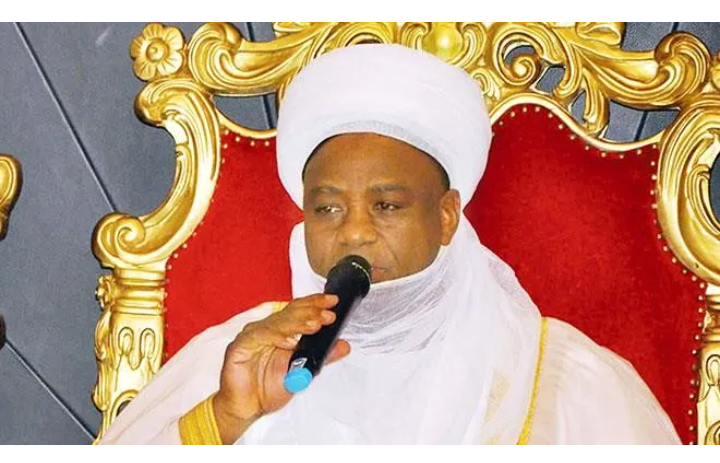
The first came from the Sultan of Sokoto, Alhaji Muhammadu Sa’ad Abubakar III, the spiritual head of Muslims in Nigeria and President-General of the Nigerian Supreme Council for Islamic Affairs. He has publicly commended President Tinubu, linking the administration’s approach to religious tolerance with recent economic gains. During the commissioning of the Bola Ahmed Tinubu Darul’Ilm Centre for Islamic Studies in Kaduna, the Sultan urged Nigerians to downplay ethnic and religious differences and praised the appointment of the DSS Director-General as a bridge-building move.
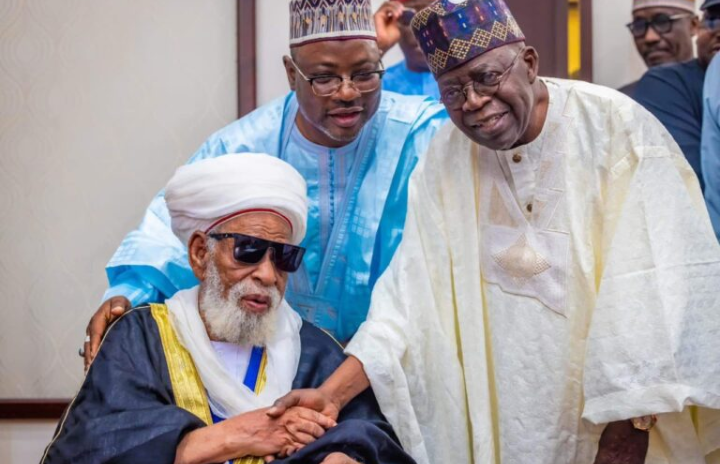
Weeks later, the Sultan visited the President at the State House in Abuja ahead of Eid-al-Fitr 2026. In Sokoto, while hosting the First Lady, he also sought divine intervention for those “perpetrating evil in the land” and commended the Renewed Hope Initiative for touching millions of Nigerians. The First Lady in turn thanked him for “constant guidance to the administration… since inception”.
The second submission came from Christian leaders across the country. At the National Executive Council meeting of CAN in Abuja, the Secretary to the Government of the Federation, George Akume, acknowledged their concerns and pledged engagement on security, welfare, and economic opportunities. The administration “recognises the legitimate concerns of Christians and other citizens regarding safety, equal opportunities, freedom of worship”. 09ae
That diplomatic language did not mask the frustration. The Pentecostal Fellowship of Nigeria told the President to “go beyond salary donation” and confront worsening hardship and insecurity. Catholic Bishops, at their First 2026 Plenary Assembly, described the cost of living as “unbearable,” linked to subsidy removal and naira floating without safety nets, and warned the country was drifting toward a state of emergency due to hardship and insecurity. “The cry of the poor has reached a crescendo,” they said.
Other clerics were blunter. The chairman of TEKAN/ECWA, Rev. Andemun Musa, called for decisive action on persistent security challenges in Northern Nigeria, particularly “targeted attacks on Christians”.
The President of HEKAN, Rev. Dr. Amos Kiri, begged Tinubu to urgently address worsening insecurity and hunger, citing continued killings of church members.
For many Northerners, the contrast is jarring because it collapses into one question: who is representing our lived reality?
On the streets of Sokoto, Kano, Kaduna, Katsina and Maiduguri, the economic pressure is immediate. Food inflation, transport costs, and the removal of fuel subsidy have hit low-income households hardest, a point even bishops in the South flagged as hitting “low-income earners, civil servants, and small business owners”. That experience is shared across faith lines in the North. dafe
Security is even more visceral. The Sultan himself has condemned killings by terrorists and bandits, saying “those killing people are not Muslims but criminals” and urging security operatives to “deal decisively with them”. Northern communities have heard similar language from Christian leaders who link poverty and unemployment to recruitment by extremists.
So how do Northerners read the Sultan’s commendation? One strand sees it as institutional responsibility. As co-chair of the National Council of Traditional Rulers, the Sultan’s role has long been to counsel, stabilize, and avoid open confrontation with federal power. His praise for religious tolerance and for specific gestures, like a Christian building an Islamic school for orphans, fits that bridge-building tradition.
Another strand in the North reads it as elite accommodation. In a region where banditry and abductions remain daily news, a commendation without a public list of deliverables can sound distant. The perception is: if the Sultan is close to the Villa, he should be able to extract concrete security and economic commitments, not just offer prayers and praise.
The Christian leaders’ submission lands differently. Because CAN, PFN, CBCN and TEKAN have been vocal about Northern insecurity, many Northern Christians hear their statements as the only public articulation of their pain. The bishops’ description of a “culture of death” resonates in communities that have buried victims.
Northern Muslims who are also struggling with poverty do not automatically reject the church’s critique. In markets in Zaria or Jos, the complaint about “unbearable” cost of living is not tagged Christian or Muslim. It is tagged hungry.
That creates a third reading: both leaders are right, but incomplete. The Sultan emphasizes unity and long-term cohesion. The church emphasizes urgency and accountability. Northerners are left to ask whether the two can be combined into policy.
Politically, the timing matters. With talk of a second term already circulating, commendations from traditional institutions are often interpreted as early endorsements. Criticisms from the church are read as early warnings. Northern voters, who delivered large blocs in 2023, know their leverage is being courted by both narratives.
Governors and other stakeholders are watching. The user’s note that “since the sultan have submitted, the governor and other stakeholders would do same” reflects a real dynamic in Northern politics: the Caliphate’s posture often shapes the room for governors, emirs, and political elites. If the Sultan chooses praise, it becomes harder for a governor to lead with protest.
Yet the base is not monolithic. Youth in the North are less deferential to titles. On social media and in motor parks, the conversation is about results: are farmers returning to their fields? Are highways safe at night? Is NELFund, N-Power, and cash transfers reaching them? The President himself listed those programs when speaking to Muslim leaders. 3ecf
The risk for the government is that praise without relief looks like disconnect. The risk for the church is that protest without partnership looks like opposition for its own sake. Northerners are testing both.
What many are asking for is a middle path: acknowledge the commendation’s call for unity, but demand the church’s specificity. That means measurable targets on security operations in the Northwest and Northcentral, food security programs tied to the farming season, and transparency on palliatives.
The Sultan’s recent prayer for the “repentance of those perpetrating evil” and his call for decisive action suggest he is not ignoring the violence. The church’s call to “address hardship” suggests it is not ignoring governance.
In the end, Northerners are likely to judge both submissions by one standard: what changes on the ground before the next election cycle. Praise that opens doors in Aso Rock is valuable only if it translates to fewer roadblocks, cheaper food, and safer villages.
If it does not, the church’s protest will sound prophetic. If it does, the Sultan’s commendation will look prescient.
For now, the North is holding both papers in its hands — one of encouragement, one of warning — and waiting to see which one the President answers with policy, not just words.
MAHMOUD is a Kano base POLITICAL ANALYST and publisher of The Northern Star online newspapers can be rich 07060766191 indagi3792@gmail.com
About The Author