By Editor
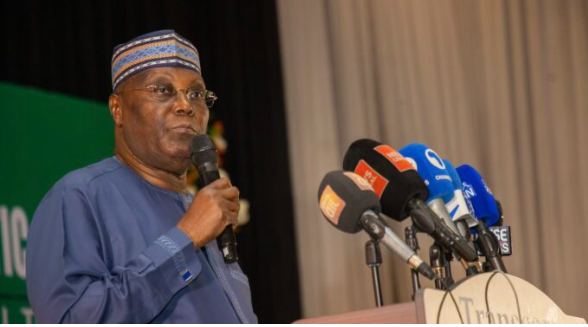
Former Vice-President Atiku Abubakar has said he would restore petrol subsidy if elected president in 2027, arguing that the removal of the subsidy by President Bola Ahmed Tinubu has not produced the promised benefits for ordinary Nigerians.
Atiku’s position is based largely on his argument that Nigerians have endured a sharp rise in the cost of living since the subsidy was removed, while the government has not adequately demonstrated how the savings have been translated into tangible improvements in the lives of citizens.
Speaking during an interview, Atiku said he did not initially oppose the removal of the subsidy itself. His concern, according to him, is what happened to the money that was expected to be saved after the policy was discontinued.
He questioned why the funds generated from the removal of the subsidy had not been sufficiently reflected in areas such as education, security, poverty reduction, infrastructure and employment opportunities for young Nigerians.
President Tinubu announced the removal of the petrol subsidy on May 29, 2023, shortly after assuming office. The decision immediately triggered a significant increase in petrol prices and contributed to higher transportation costs, food prices and general living expenses across the country.
Atiku argues that subsidy removal could have been easier for Nigerians to accept if the savings had been clearly channelled into projects and programmes capable of reducing hardship. His argument therefore centres on accountability, transparency and how public resources are utilised.
However, the federal government has presented a different picture. Finance Minister Taiwo Oyedele said Nigeria generated about N15.8 trillion in resources between June 2023 and December 2025 as a result of the reforms associated with subsidy removal and changes in the foreign-exchange regime.
The debate therefore goes beyond whether subsidy should exist or not. It raises a larger question about whether the financial gains from removing subsidy are reaching ordinary Nigerians through better services, stronger social protection, improved security, infrastructure and economic opportunities.Atiku’s promise to restore subsidy is consequently emerging as a major campaign issue ahead of the 2027 presidential election.
His argument is that if government can account for the savings and use them properly, Nigerians should see meaningful benefits; if not, he believes the subsidy regime should be reconsidered as part of a broader strategy to reduce the burden on citizens.
About The Author