KANO IS NOT A PLAYTHING: AN URGENT APPEAL FOR PEACE, HISTORICAL JUSTICE, AND A RECONSIDERATION OF THE INDIGENOUS HAUSA FOUNDATIONS OF THE KANO EMIRATE
His Excellency,
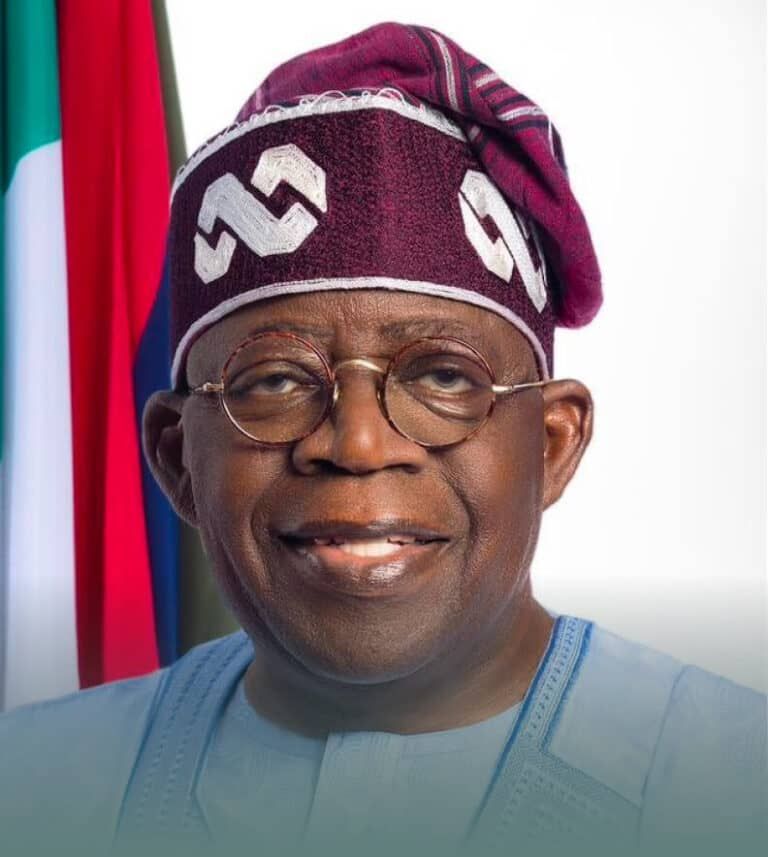
Asiwaju Bola Ahmed Tinubu, GCFR
President and Commander-in-Chief of the Armed Forces
Federal Republic of Nigeria
Your Excellency,
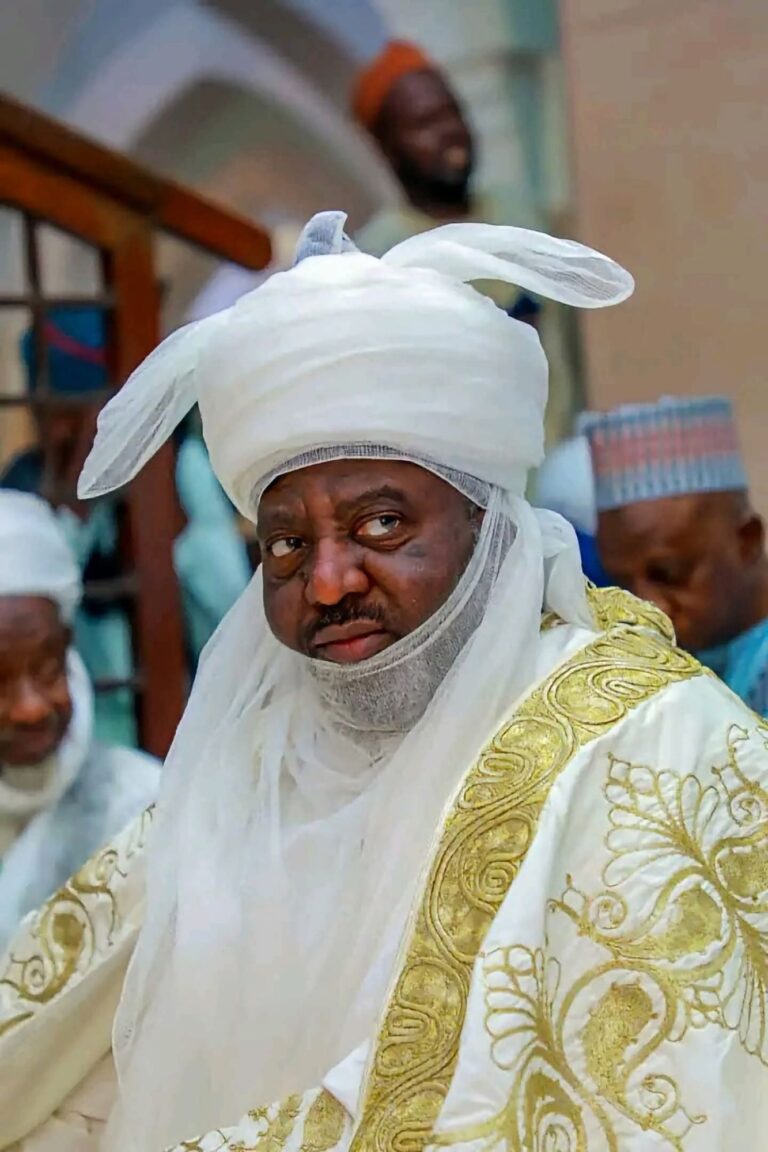
We write to you at a moment of grave concern over the continuing crisis surrounding the Kano Emirate, particularly the dispute between His Highness Muhammadu Sanusi II and Alhaji Aminu Ado Bayero.
What is happening in Kano must not be treated as a political game or as an ordinary disagreement between individuals. Kano is home to millions of ordinary people whose lives, businesses, families, and security could be placed at risk if the present dispute is allowed to deteriorate into confrontation.
We therefore call upon the Federal Government to take urgent preventive measures to protect the people of Kano from violence.
THIS CRISIS HAS DEEP HISTORICAL ROOTS
The present crisis cannot be properly understood without acknowledging Kano’s much older history.
Kano existed for centuries as a Hausa kingdom before the nineteenth-century jihad. Historical accounts date the end of the pre-jihad Kano kingdom to the period of the Sokoto jihad, after which a new emirate became associated with the Sokoto Caliphate.
The political transformation of Kano during the jihad period was therefore not simply a change of personalities. It represented a major transformation in the political authority governing an established Hausa state.
The emergence of the Fulani-led emirate should consequently be understood within that broader historical context.
Our concern is that the consequences of that political transformation continued for generations and profoundly affected the political history of Kano and its indigenous Hausa population.
FROM THE JIHAD PERIOD TO THE DABO DYNASTY
The nineteenth-century history of Kano was subsequently dominated by the Dabo dynasty.
Ibrahim Dabo became Emir of Kano in 1819 and established the dynasty that would govern the Kano Emirate for much of the nineteenth century. Historical sources describe Dabo as a leader of the Sullubawa and identify his dynasty as ruling Kano from 1819 until the British conquest in 1903.
But the Dabo period was itself marked by serious internal conflicts.
The struggle involving Dantunku and Ibrahim Dabo is part of the history of political resistance and contestation surrounding Dabo’s consolidation of authority. A historical account of Dabo’s reign records that Dabo fought several battles against Dantunku before consolidating his position.
These events demonstrate that Kano’s political history was never a simple, uninterrupted story of one ruling house peacefully succeeding another.
THE 1893–1895 BASASA: WHEN ROYAL RIVALRY TURNED INTO WAR
The history of the Kano Emirate provides an even more important warning.
After the death of Emir Muhammad Bello in 1893, the succession dispute between Muhammad Tukur and the faction led by Yusuf, both connected to the Dabo dynasty, developed into the conflict known as the Basasa, or Kano Civil War.
The conflict divided Kano between the Tukurawa and Yusufawa and continued through 1894 and into 1895. Contemporary and historical accounts describe the conflict as one of the most destructive episodes in Kano’s political history.
The lesson for today’s Kano is unmistakable:
A dispute over a throne can become a dispute that destroys the peace of an entire society.
We must not allow history to repeat itself.
TODAY’S DISPUTE MUST NOT BECOME ANOTHER BASASA
Today, Kano again faces a divided traditional institution.
The competing claims surrounding Sanusi Lamido Sanusi and Aminu Ado Bayero have generated prolonged political and legal confrontation.
The Kano State Government has taken legislative and executive measures concerning the emirate, while litigation has continued in the courts. The Court of Appeal has also issued decisions affecting different aspects of the litigation.
Yet the dispute remains unresolved in the eyes of many Kano citizens.
The situation is particularly dangerous because public appearances associated with hawa have raised fears of direct confrontation between rival supporters.
This is precisely the point at which the Federal Government must prioritise the protection of human life.
Kano’s poor people must not die because politicians, royal families, or competing factions cannot settle a dispute peacefully.
OUR HISTORICAL QUESTION
Beyond the immediate dispute between the two present claimants, there is a larger historical question that Kano society has the right to discuss:
What was the traditional political institution of Kano before the nineteenth-century transformation, and should the historical Hausa ruling traditions have a greater place in determining its future?
Those who advocate the restoration of the institution to what they regard as its original indigenous Hausa foundation argue that Kano was historically a Hausa kingdom before the nineteenth-century jihad and that the political authority established afterward should not automatically be regarded as the only legitimate historical model for Kano’s future.
This is a historical and political position that deserves to be examined openly rather than dismissed without consideration.
If such a claim is to be made, however, it should be supported by historical records, genealogies, palace traditions, archival materials, and scholarly research.
SHEIKH IBRAHIM KHALIL ALHAUSAWI: A CASE FOR HISTORICAL INVESTIGATION
WE CALL ON PRESIDENT TINUBU TO INTERVENE IN THE KANO EMIRATE CRISIS AND RETURN THE TRADITIONAL HERITAGE OF THE HAUSA PEOPLE
We call on President Bola Ahmed Tinubu to intervene in the Kano Emirate crisis and ensure that the traditional heritage of the Hausa people is restored to them. Sheikh Ibrahim Khalil Alhausawi is one of the people whose family represents this indigenous Hausa heritage.
A Brief History of Sheikh Ibrahim Khalil Alhausawi
Date of Birth: 14 October 1952
Place of Birth: Kano City
Full Name: Ibrahim Khalil Idrith
Father: Alhaji Idrith Ibrahim (Kwantrola)
Religion: Islam (Sunni)
Occupations: Teacher, Preacher, Theologian, Farmer, and Trader
Genealogy
Ibrahim Khalil Idrith → Ibrahim → Ibrahim → Abubakar → Abubakar → Muhammad → Muhammad → Sulaiman → Sulaiman → Abdullahi
Sheikh Ibrahim Khalil is a Hausa man and a native of Kano, belonging to the Gidan Kanawa family tradition.
The reason the family is known as Gidan Kanawa is that the name is associated with the family’s indigenous Kano identity and its ancestry connected with the Kutumbawa. According to the family’s historical tradition, the Kutumbawa are Hausa and are among the indigenous traditions associated with Kano’s traditional ruling houses.
When the term Bakutumbe is used, it refers to a person descended from the Kutumbawa. According to this family tradition, the Kutumbawa are Hausa.
THE HISTORICAL RULING HOUSES
According to the historical tradition preserved by the family, Bawo of Daura was the father of Bagauda, who became associated with the establishment of the Kano kingship after defeating Barbushe in battle.
The Bagauda royal tradition is said to have produced three royal houses:
- Gaudawa or Bagaudawa
- Rumfawa
- Kutumbawa
According to this tradition, these houses ruled Kano for more than 800 years before the conflicts associated with the nineteenth-century Fulani jihad.
The family further states that the Gidan Kutumbawa still exists today in the Durumin Iya area of Kano City.
ABDULLAHI BARWA BAKUTUNBE ANCESTOR OF THE GIDAN KANAWA
Mallam Abdullahi Barwa Bakutunbe is identified in the family tradition as an ancestor of the Gidan Kanawa lineage.
According to the family record, Mallam Abdullahi Barwa Bakutunbe was a Muslim, and his descendants continued as Muslims. The family maintains that the lineage has remained within Islam throughout its generations.
His nasab is traced to the Kutumbi/Kutumbawa house, which the family identifies as the third of the historical houses associated with the Kano throne, with its period of rule given in the family record as 1623–1805.
The family record states that Mallam Abdullahi Barwa Bakutunbe lived during the time of Sarkin Kano Bawa, whose reign is given as 1660–1670.
Mallam Abdullahi Barwa Bakutunbe is remembered in the family tradition as a man who devoted his life and time to serving Islam and whose aspiration was to leave behind righteous descendants.
Children of Abdullahi Barwa Bakutunbe
According to the family record, Mallam Abdullahi Barwa Bakutunbe had one son:
Muhammad
Muhammad was the only son attributed to Abdullahi Barwa Bakutunbe in this family record.
Children of Muhammad
Muhammad had four children:
- Mal. Abubakar Babalo
- Mal. Muhammad
- Mal. Sulaiman
- Malama Hajara
According to the family record, all four shared the same father and mother.
Mal. Abubakar Babalo, son of Muhammad, was the eldest son of Muhammad and is identified as the eldest grandson of Mallam Abdullahi Barwa Bakutunbe.
The family record further identifies Abubakar Babalo as the grandfather of Alhaji Idrith Ibrahim (Kwantrola), the father of Sheikh Ibrahim Khalil.
Children of Abubakar Babalo
According to the family record, Mal. Abubakar Babalo had four children:
- Mal. Ibrahim Tanko identified as the grandfather of Sheikh Ibrahim Khalil
- A’ishatu Yar’Kucciya
- Khadijah Jimmai Babba
- Hajara
THE GENEALOGICAL LINE TO SHEIKH IBRAHIM KHALIL
The family genealogy therefore records the relevant line as:
Abdullahi Barwa Bakutunbe
↓
Muhammad
↓
Abubakar Babalo
↓
Ibrahim Tanko
↓
Alhaji Idrith Ibrahim (Kwantrola)
↓
Sheikh Ibrahim Khalil Idrith
This family history is presented as the genealogical tradition preserved by the family and as part of the broader historical discussion concerning the indigenous Hausa traditions of Kano.
Sheikh Ibrahim Khalil Alhausawi therefore represents one of the living family traditions through which the historical Hausa identity and indigenous royal heritage of Kano can be examined.
For that reason, we propose that Sheikh Ibrahim Khalil Alhausawi be treated as a “Raba Gardama” — a historical reference point for opening the discussion — rather than simply as another political claimant.
His family history provides an example of the indigenous Hausa genealogical traditions that remain within Kano and deserve to be documented.
KANO’S FUTURE SHOULD NOT BE DECIDED BY VIOLENCE
Your Excellency, we are not calling for Kano’s people to fight one another.
We are calling for the opposite.
We do not want another Basasa.
We do not want another cycle of royal confrontation.
We do not want ordinary Kanawa to become casualties of a struggle over a throne.
We therefore ask the Federal Government to:
- Take urgent preventive security measures to stop any confrontation that could lead to loss of life.
- Encourage all competing parties to comply with lawful court orders and peaceful procedures.
- Support dialogue involving the Kano State Government, traditional stakeholders, and representatives of the competing sides.
- Encourage an independent historical and genealogical examination of Kano’s traditional ruling houses.
- Give indigenous Hausa families with documented historical genealogies an opportunity to present their evidence.
- Consider, as part of the broader historical debate, the argument that Kano’s traditional institution should be reconnected with its indigenous Hausa foundations.
KANO IS NOT A PLAYTHING
Your Excellency, Kano is not a political toy.
It is not an institution to be used to settle political scores.
It is not worth the blood of a single Kano citizen.
The history of Kano already records what can happen when disputes over royal succession are allowed to become armed conflicts. The Basasa of 1893–1895 remains a powerful historical warning.
Today, we have an opportunity to prevent history from repeating itself.
The question is therefore larger than Sanusi versus Aminu Ado Bayero.
It is about the future of Kano’s traditional institution, the protection of millions of Kano citizens, and the historical question of the place of the indigenous Hausa political tradition within that institution.
Those who believe that the traditional institution should ultimately be returned to its original Hausa foundation should be allowed to make that case through history, evidence, lawful procedures, and peaceful political engagement not through violence.
FINAL APPEAL
Your Excellency, we urge the Federal Government to act before confrontation turns into bloodshed.
Protect Kano.
Protect its people.
Prevent another Basasa.
Open the historical record.
Hear the indigenous Hausa voices.
And allow the future of Kano’s traditional institution to be determined through lawful, peaceful, and historically informed processes.
The people of Kano should never again be forced to pay with their blood for a dispute over a throne.
Kano’s history must be studied.
Kano’s people must be protected.
And Kano’s traditional institution must be treated with the seriousness it deserves.
Respectfully,
Concerned Citizen and Advocate for Historical Justice
Nigeria
About The Author