By Mahmoud Muhammad, Kano
KANO — As the 2027 general elections draw closer, the political atmosphere in Kano State is becoming increasingly charged, with several forces converging to create an uncertain electoral landscape. What initially appeared to be a straightforward contest between political parties is gradually developing into a wider struggle involving the emirate institution, party loyalty, former political alliances, emerging opposition platforms, grassroots structures and the performance of the incumbent administration.
The most significant question is whether Governor Abba Kabir Yusuf can reproduce the political coalition that brought him to power in 2023 or whether the changing alliances ahead of 2027 will expose weaknesses within the structure that supported his emergence. At the same time, opposition parties are looking for ways to break the political dominance associated with the Kwankwasiyya movement.
Kano’s political crisis is therefore not the product of a single disagreement. Rather, it is the accumulation of several competing interests, some visible and others developing quietly beneath the surface. The emirate controversy, the relationship between Abba and Kwankwaso, the activities of APC, the possible movement towards ADC and the search for a credible opposition candidate could all influence the final outcome.
- The Emirate Crisis and the Politics of Traditional Authority
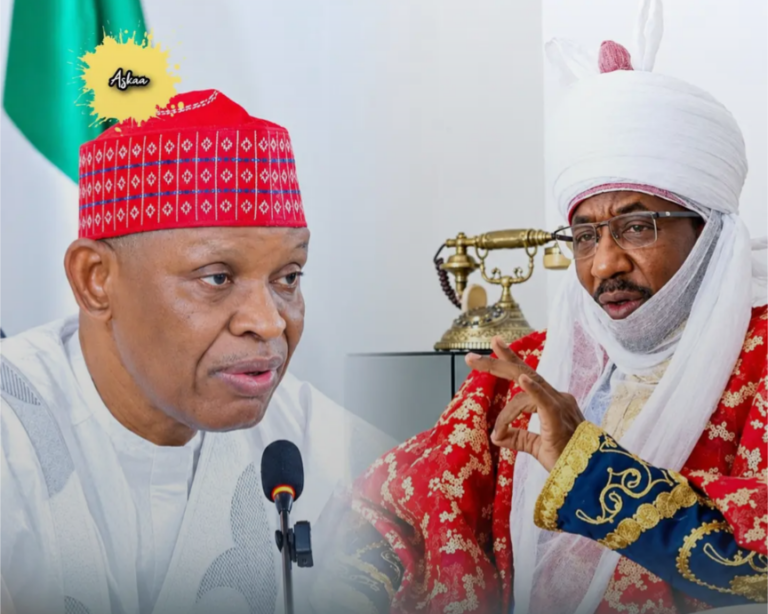
At the centre of Kano’s political uncertainty is the continuing dispute surrounding Emir Muhammadu Sanusi II and Emir Aminu Ado Bayero. Although the matter has important legal and traditional dimensions, its political implications have become impossible to ignore.
The emirate institution remains deeply embedded in Kano’s social and cultural life. For generations, traditional rulers have played important roles in community mobilisation, conflict resolution and maintaining social relationships. Consequently, any division within the traditional institution inevitably generates political interest.
The emergence of competing centres of traditional authority has also created a sensitive environment for politicians. Political actors are aware that the palace commands a level of emotional loyalty that conventional political structures cannot easily manufacture.
However, it would be simplistic to assume that allegiance to a particular Emir automatically translates into votes. Kano voters have historically demonstrated the ability to combine traditional loyalties with political calculations based on candidates, parties, economic interests and local circumstances. - The Two-Palace Question and Its Wider Consequences
The dispute has created what may be described as two competing perceptions of traditional legitimacy. Supporters of the respective camps interpret the development differently, while politicians closely monitor every major public appearance, statement and traditional event.
The significance of the issue lies not only in who controls a palace, but in how the disagreement affects the social networks surrounding the institution. Traditional leaders, district heads, community elders and other influential actors could find themselves under pressure from competing political interests.
The danger for Kano is that a traditional dispute could gradually become absorbed into partisan politics. Once political parties begin interpreting traditional activities through the lens of electoral advantage, an institution traditionally expected to provide unity could become another arena of political competition. - Abba and the Kwankwaso Question
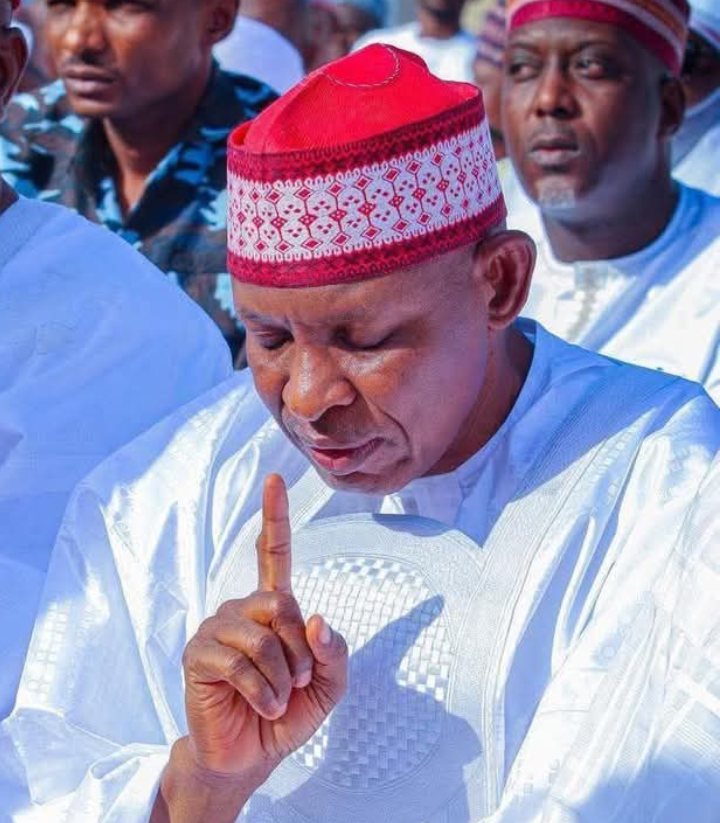
Governor Abba Kabir Yusuf’s political story cannot be separated from Senator Rabiu Musa Kwankwaso and the Kwankwasiyya movement. The political network associated with the former governor played a significant role in the coalition that produced the NNPP victory in Kano in 2023.
The question now is whether that relationship will remain as strong and politically effective as the 2027 election approaches.
Kwankwaso remains one of the most recognisable political figures in Kano, with a grassroots network that extends across the state’s local government areas. His political influence is therefore both an advantage and a potential complication for the incumbent.
For Abba, the challenge is to demonstrate that his administration has developed sufficient political identity and grassroots support of its own while maintaining the wider coalition that brought him to office. - Incumbency Versus Political Structure
Abba enters the next election with the advantage of incumbency. He has visibility, access to government institutions and the opportunity to point to policies and projects implemented by his administration.
But Kano’s political history demonstrates that incumbency does not automatically translate into victory.
The real question is whether the administration has sufficiently strengthened its political organisation at ward and polling-unit levels. Elections are ultimately won at polling units, and the ability to mobilise voters, coordinate agents and maintain communication across thousands of electoral locations remains crucial.
An incumbent may have enormous public visibility but still face difficulties if political structures beneath the surface are weak or divided. - The APC’s Renewed Ambition in Kano
The All Progressives Congress is unlikely to approach the 2027 election with the same strategy used in 2023. The party has the advantage of controlling the federal government, while President Bola Ahmed Tinubu’s political structure is expected to pay close attention to Kano because of its electoral importance.
The APC’s challenge, however, is substantial. Federal power does not automatically translate into control of Kano’s grassroots electorate.
The party would need to reconcile its internal interests, strengthen its organisation and attract influential politicians capable of connecting its national message with local concerns. Any serious APC campaign would also have to compete with the emotional appeal of Kwankwasiyya. - Tinubu’s Kano Calculation
Kano’s large electorate makes the state strategically important in presidential politics. For the APC, the objective may not necessarily be limited to defeating the NNPP at the state level; improving its presidential vote share could also strengthen the party’s national electoral arithmetic.
This explains why every movement within Kano’s political space is likely to attract attention from Abuja.
The APC could therefore seek alliances with politicians, traditional stakeholders, business interests and community influencers. But the success of such an approach would depend on whether those alliances penetrate the grassroots rather than remaining confined to elite meetings. - Gawuna and the Search for an Alternative
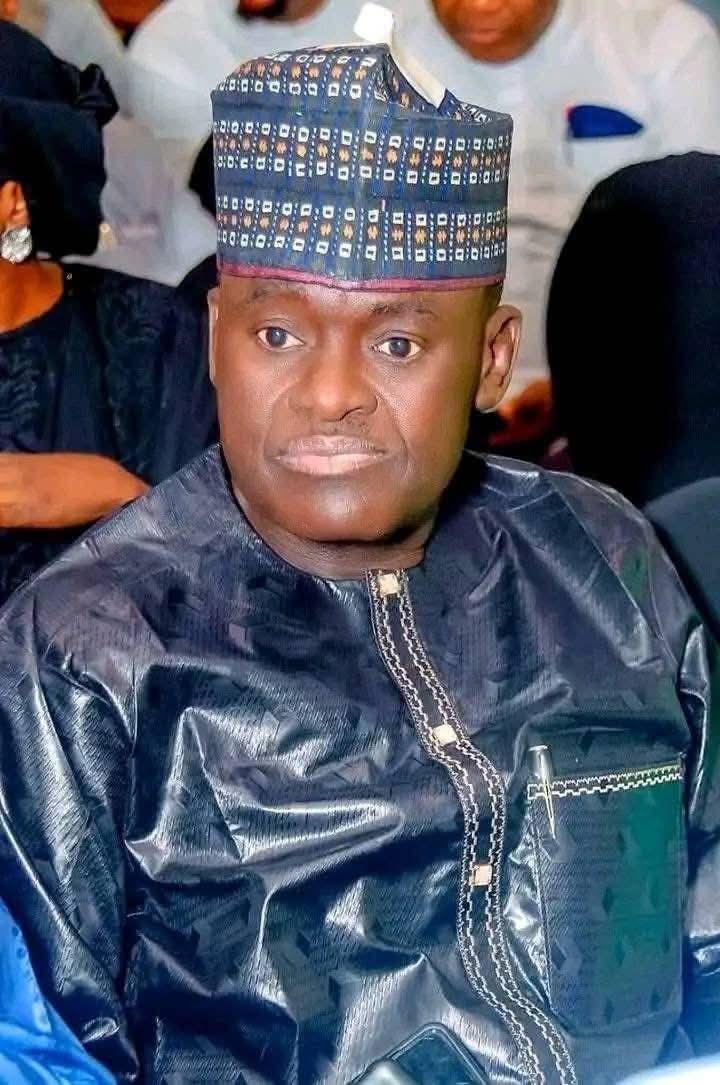
Dr Nasiru Yusuf Gawuna remains an important name in Kano’s opposition politics following his 2023 governorship contest. His previous experience gives him statewide recognition, even though he was defeated in the last election.
The political question is whether Gawuna can once again become a central figure in an opposition coalition or whether new political arrangements will produce another candidate.
His possible association with alternative political platforms has generated interest because a movement outside the traditional APC-NNPP confrontation could potentially attract politicians and voters dissatisfied with both camps.
But name recognition alone will not be sufficient. Any candidate seeking to challenge Abba must develop a structure capable of converting popularity into actual votes. - The ADC and the Fragmentation of Opposition Forces
The emergence of the African Democratic Congress as an alternative political platform adds another dimension to Kano’s political calculations.
If prominent politicians leave established parties for ADC or another opposition platform, the movement could either strengthen the opposition by creating a broader coalition or weaken it by dividing votes.
The outcome would depend heavily on candidate selection and alliance-building.
For the NNPP, fragmentation among opposition parties could provide an advantage. For APC and other challengers, however, the danger is that several competing candidates could collectively divide the anti-incumbency vote and allow the ruling party to benefit from a plurality. - The New Kano Voter
Another factor that deserves serious attention is the changing behaviour of Kano’s electorate.
The Kano voter of 2027 may not behave exactly like the voter of 2023. Economic pressure, employment, education, security, infrastructure and the cost of living are increasingly important political issues.
Urban voters, particularly younger citizens, are also consuming political information through social media rather than relying entirely on traditional party structures or community leaders.
This does not mean traditional influence has disappeared. Rather, Kano’s political environment is becoming a combination of traditional mobilisation, party organisation and digital campaigning. - Youth and Economic Pressure
The youth population could become one of the decisive variables of the 2027 election.
Young voters are likely to evaluate candidates through questions of employment, entrepreneurship, education, skills development and economic opportunity. Political slogans may therefore have less impact where voters believe that economic conditions have not improved sufficiently.
For the incumbent, this represents both an opportunity and a challenge. Government programmes that produce visible benefits could strengthen support, while dissatisfaction over economic conditions could provide opposition parties with an effective campaign message. - Dubar and the Politics of Optics
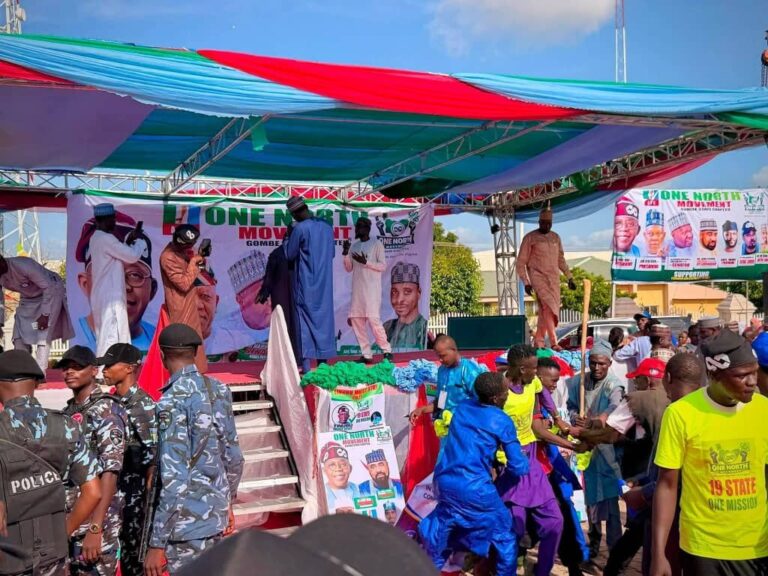
The controversy surrounding the Dubar procession demonstrates how traditional ceremonies can acquire political significance during an election cycle.
A large procession of horsemen can produce powerful images of traditional influence and popular mobilisation. Politicians understand the importance of such optics because political campaigns are increasingly fought not only through policies and rallies but through images capable of shaping public perception.
Nevertheless, crowd size should not automatically be interpreted as electoral strength. A traditional gathering and a voting population are not the same thing.
The real significance of Dubar lies in what it represents: the continuing capacity of Kano’s traditional institution to command public attention. - Security Agencies and Political Sensitivity
As political activity increases, security agencies will inevitably become important actors in maintaining public order.
Decisions regarding political rallies, traditional processions, demonstrations and other large gatherings will be closely watched. Any perception that security rules are being applied selectively could generate additional political tension.
For that reason, neutrality, consistency and transparency will be essential.
Kano’s political temperature is already high enough that an administrative decision concerning a gathering could quickly become interpreted as a political statement. - The Quiet War for Grassroots Structures
Beyond the public arguments, a quieter political contest is taking place across the state’s 44 local government areas.
Political parties will be interested in ward leaders, polling-unit agents, local organisers, community influencers and financiers. These networks rarely dominate newspaper headlines, but they often determine whether a party’s campaign machinery actually functions on election day.
The party that controls the strongest grassroots network could possess a significant advantage, particularly in a closely fought contest.
This is why the movement of experienced politicians between parties should not be dismissed as mere political drama. Each defection can carry ward-level networks with it. - Money, Loyalty and Political Realignment
Election campaigns require substantial financial resources, and Kano’s political competition is likely to attract financiers from different camps.
However, money alone cannot guarantee victory. Financial resources must be combined with organisation, candidate credibility and an effective message.
The more important issue is political loyalty. Some politicians may remain publicly committed to one party while maintaining relationships with politicians in rival camps.
Such flexibility is common during the period before party primaries, when politicians seek to preserve their options.
The decisive realignments may therefore occur much later than current speculation suggests. - The Opposition’s Biggest Challenge: Unity
The greatest advantage available to Governor Abba may ultimately be opposition disunity.
If APC, ADC and other political forces present separate candidates while NNPP maintains a strong core, the opposition vote could be divided among several contenders.
Conversely, if opposition politicians agree on a candidate with broad acceptance, the electoral arithmetic could change dramatically.
The search for a consensus candidate may therefore become one of the most important political stories in Kano before the election. - Governance Will Become the Central Defence of the Incumbent
For Abba, the strongest defence against opposition attacks will ultimately be his record in office.
Political alliances can provide machinery, but voters will still evaluate the administration on issues affecting their daily lives.
Infrastructure, education, healthcare, employment, security, urban development and the cost of living could all become campaign issues.
The governor’s ability to present measurable achievements while responding convincingly to criticism will therefore be critical to his re-election campaign. - The Election May Be Decided by Alliances Rather Than Personalities
Kano’s political history is filled with unexpected alliances, defections and realignments. This means that the current political map should not be regarded as permanent.
A politician currently identified with one camp could become an important member of another before 2027. Similarly, political actors who appear united today could disagree over primaries, candidacy or power-sharing arrangements.
The final alliance structure may therefore matter more than today’s headlines. - Kano’s 2027 Battle Is Bigger Than Abba
At its deepest level, the 2027 contest is not simply a referendum on Governor Abba Kabir Yusuf.
It is a struggle over the future direction of Kano politics: whether the Kwankwasiyya political architecture will retain its dominance; whether APC can rebuild its influence; whether the emirate crisis will continue to affect political mobilisation; whether alternative platforms such as ADC can attract significant support; and whether a new generation of voters will demand a different political agenda.
For Abba, the central task is to consolidate his administration’s achievements, maintain political cohesion and prevent the fragmentation of the coalition that delivered the 2023 victory.
For the opposition, the challenge is to move beyond criticism of the incumbent and produce a credible alternative capable of uniting politicians, grassroots structures and voters.
The emirate crisis may remain the most visible symbol of Kano’s current political tension, but it will not by itself determine the election. Governance, candidate credibility, party organisation, economic conditions, traditional influence and coalition-building will ultimately interact to produce the 2027 result.
Kano’s political environment is therefore entering a period in which every alliance, every defection, every court decision, every major traditional event and every shift in public sentiment could alter the electoral equation.
And with the state’s enormous political weight in both state and presidential elections, what happens in Kano will not remain a Kano story. It could become one of the defining political battles of Nigeria’s 2027 election.
MAHMOUD WROTE THIS PIECE FROM KANO, PRESENTLY CORRESPONDENT OF CABAL BASE IN KANO
indagi3792@gmail.com
About The Author