By Editor
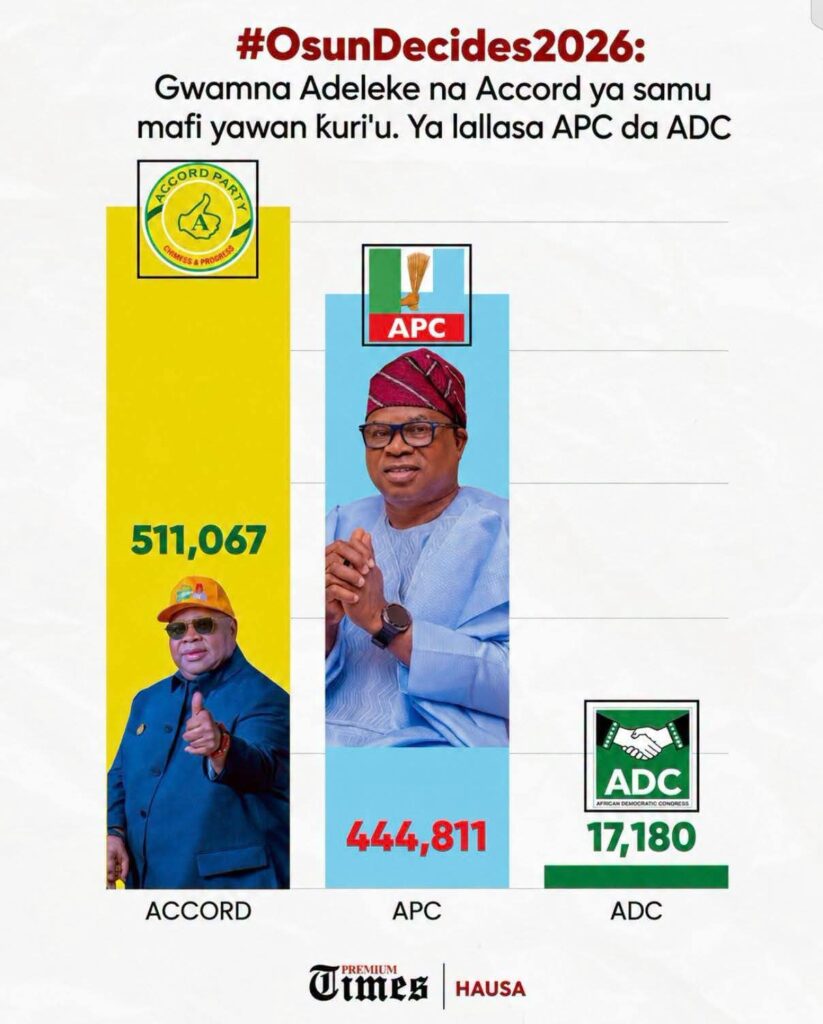
The African Democratic Congress walked into the Osun governorship contest with loud confidence and the weight of one name behind it: Rauf Aregbesola. The former governor, now ADC National Secretary, had returned home to Ilesa to present Dr. Najeem Salaam as the party’s flag bearer for the August 15 poll. To many observers, Aregbesola still carried the magic of his 2010–2018 years in office, and the assumption was simple — even if ADC didn’t win, it would at least force a real fight. What happened instead was an abysmal showing that left party loyalists stunned. 8ec2
From the outset, the warning signs were there, but they were drowned out by rhetoric. Aregbesola himself had dismissed doubts about ADC’s strength, telling supporters “we will meet at the poll” and insisting the APC had failed at every level. He framed ADC as the “party of conscience and service” that would harvest Nigerians’ anger with the ruling party. In Osun, that message was tied directly to nostalgia for his education reforms and infrastructure push. The crowd cheered. The structure, however, was missing. fbecb91d
The party’s biggest baggage was not its message but its organization. Analysts flagged fragmented local structures, with rapid expansion leaving several wards with overlapping leadership claims. Disputes like these suppress turnout and weaken mobilization exactly when you need it most. On top of that, internal dissent broke out early. Adeoti, described as a founding pillar of Aregbesola’s Osun caucus, walked away just before the primary, exposing cracks in a party that was supposed to be united by a common cause. 2116
Money and experience compounded the problem. Compared to APC and the PDP-led government of Governor Ademola Adeleke, ADC’s war chest was modest. Leaders hoped Aregbesola’s stature would attract donors, but the gap remained. More critically, the ADC had never run a major Southwest governorship campaign. “A serious campaign requires discipline, messaging, data, and logistics,” one consultant noted. “They’re learning on the move.” Voters picked up on it. Many still saw ADC as “a refuge for displaced politicians” rather than a governing alternative. 2116
Aregbesola’s influence, once decisive, could not paper over those deficits. Even former allies questioned the approach. Ex-Senator Mudashiru Hussein berated the ADC leadership for lacking cohesive structure, ideology, and long-term organization. He argued it was “intellectually dishonest to strip elections of the roles played by leadership, structure, ideology, and long-term political organisation, which ADC lacks”. In other words, personality alone doesn’t win elections anymore. fcbb
The crisis went beyond Osun. Southwest ADC leaders even petitioned for Aregbesola’s removal as Interim National Secretary, accusing him of interfering in candidate selection and creating parallel organs in Oyo, Ogun, Osun, Ekiti and Ondo. The zonal leadership dismissed the petition, but the public fight did ADC no favors. It reinforced the perception of a party at war with itself weeks before voting. cb3b6d43
On election day, the result reflected all of that. Despite rallies and Aregbesola’s vow to “reclaim power”, ADC failed to convert name recognition into votes. Governor Adeleke’s camp seized the moment to remind voters of Aregbesola’s tenure — half salaries, debt, and uncompleted projects — while claiming his own administration had paid arrears and pension debts. The counter-narrative stuck. 319e
In the end, the Osun test exposed a hard truth for the ADC: a big name cannot substitute for party structure. Aregbesola remains a respected voice in Osun politics, but the election showed that influence without grassroots machinery, funding, and unity produces noise, not results. For a party eyeing 2027, the Osun outcome is alarming — and a clear signal that rebuilding from the wards up will matter more than any single comeback story.
About The Author