By Mahmoud
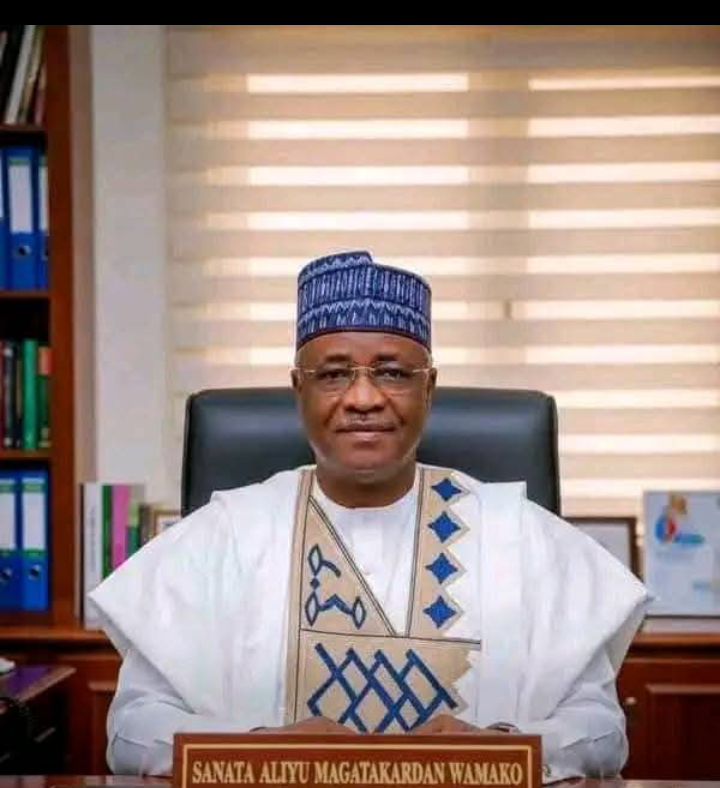
For nearly two decades, the name Aliyu Magatakarda Wammakko has been synonymous with Sokoto politics. Whether in power or out of power, his influence continues to shape who gets what, and who goes where in the Seat of the Caliphate.
The question many political watchers keep asking is simple: why has Wammakko remained the central figure steering Sokoto politics when many of his contemporaries have faded away?
Part of the answer lies in his early political battles. His rivalry with his predecessor, which began in the ANPP era, forced a major realignment in the state. That contest was not just about personalities, it fractured parties and created camps that still define Sokoto politics today.
The fallout from that rivalry was so intense that Wammakko eventually left the ANPP for the PDP. That move, once seen as risky, turned out to be one of his smartest political calculations.
In the PDP, he consolidated power quickly. He served two terms as governor, spending 12 years in the Government House instead of the usual
Those extra four years came from his first term starting in 2008 after a court judgment, giving him time to deepen his structures across the 23 local governments.
During those 12 years, Wammakko built a wide network of loyalists. From commissioners to council chairmen, to traditional and religious leaders, he ensured that his foot soldiers were planted in every corner of the state.
When his tenure as governor ended, many expected him to retire from active politics. Instead, he moved to the Senate and has represented Sokoto North since then. What is remarkable is that he has never lost an election at the polls.
That unbeaten record matters in politics. In a state where elections are fiercely contested, remaining undefeated has given him an aura of invincibility that strengthens his hold on followers and intimidates opponents.
Another reason for his staying power is discipline in ambition. Unlike many former governors who chase ministerial appointments or other federal portfolios, Wammakko has shown little interest in anything outside his Senate seat.
Sources close to him say he prefers the legislative chamber because it allows him to stay close to the grassroots while still having a national voice. The Senate also gives him flexibility to manage Sokoto politics without the full glare of executive responsibilities.
His decision to avoid federal appointments is also strategic. By staying out, he avoids direct clashes with the federal executive and keeps his hands free to bargain for Sokoto, whether the government at the center is APC or PDP.
Political analysts note that this “Senate-only” posture has made him a stabilizer. Governors come and go, but Wammakko remains as the constant figure that both Abuja and Sokoto must consult.
His role models, according to associates, are drawn from two schools of thought: the grassroots mobilizer and the elder statesman. He admires leaders who combine accessibility with long-term party building, not just short-term power.
Within Sokoto, he is often compared to the late Sarduna of Sokoto in terms of political structure, though he himself speaks more modestly about learning from elders who emphasized loyalty, patience and consensus.
Wammakko’s political philosophy appears to be simple: build people, not just projects. Many of his appointees from his governor days are now commissioners, lawmakers, and party leaders, and they still take directives from him.
That mentorship model is why his camp has survived party switches. When he moved from ANPP to PDP, and later to APC, a critical mass of his loyalists moved with him. The party label changed, but the Wammakko structure remained.
His link with President Bola Ahmed Tinubu, also known as Asiwaju, has further boosted his national relevance. The two are said to share a common understanding of party building and political loyalty.
That relationship became more visible after 2023, with Wammakko playing a key role in mobilizing North-West support for the APC. In return, Sokoto has enjoyed attention at the federal level, which Wammakko channels back to his base.
The Asiwaju connection also explains why Wammakko has not pushed for a portfolio. He appears comfortable being a senior party leader and senator, while leveraging his relationship with the presidency to influence decisions affecting Sokoto.
Critics argue that his long dominance has stifled new voices in Sokoto politics. Supporters counter that in a volatile political environment, his experience provides stability and direction.
What is clear is that Wammakko understands timing. He fought when he had to, reconciled when he needed to, and stepped back from executive office when it suited him, all without losing relevance.
Today, whether it is candidate selection, party leadership, or federal appointments for Sokoto indigenes, his input is still sought. That is the definition of a political godfather.
So why does Wammakko still remain to steer Sokoto politics? Because he built a machine early, he has never lost at the ballot, he chose the Senate as his base, and he mastered the art of staying relevant across parties and governments. In Sokoto, the Wammakko era is far from over.
MAHMOUD is a Kano base political analyst and the publisher of the Northern Star online newspapers indagi3792@gmail.com 07060766191
About The Author